

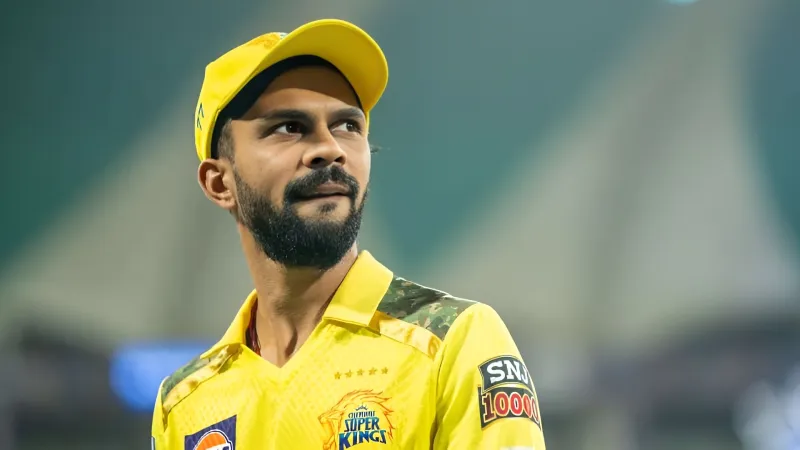

Jamie Overton bowled two tight overs in the middle phase. Lines were disciplined. The economy was controlled. He was in rhythm on a batting-friendly Bengaluru surface, where finding rhythm as a pace bowler requires effort rather than arriving automatically. Ruturaj Gaikwad broke that spell and held Overton back for the death overs. When Overton returned later against Tim David and RCB’s power hitters in full acceleration mode, he conceded heavily, and the match tilted. The decision wasn’t random; there was logic in preserving a bowler’s later overs.
Breaking Overton’s Rhythm Cost CSK Dearly
The specific cost of breaking Overton’s bowling spell is what T20 rhythm data has consistently confirmed across multiple seasons and multiple bowlers. A fast bowler who has found his release point, his run-up length, and his landing zone in the first two overs carries that information automatically into his third and fourth overs.
The same bowler returning after a ten-over break must recalibrate all of those variables in the first delivery of his new spell, under death over pressure, against set batters, with the match in the balance. The recalibration delivery is statistically the most expensive single delivery in any T20 innings. Gaikwad handed Overton’s recalibration delivery to Tim David in the death overs rather than to a middle-order batter on a good length.
Late Overton Return Invited Tim David
The specific match-up that Gaikwad’s decision created, a recalibrating pace bowler against Tim David in the death overs when RCB needed boundaries, is the worst possible version of that bowling reintroduction scenario. Tim David at death doesn’t require poor bowling to score boundaries. He requires any delivery that arrives even marginally shorter, fuller, or wider than the ideal yorker length, which is exactly what a bowler who has just returned after a long break and is still finding his release point produces.
Overton’s early spell was economical precisely because he had settled into his delivery. His late spell was expensive precisely because he was resettling. Gaikwad’s decision created the conditions where Overton’s best attribute, his settled rhythm, was unavailable at the most expensive phase of the innings.
IPL 2026 Proved Gaikwad’s Rhythm Decision Wrong
The data on bowler rhythm disruption confirms what the Overton decision cost CSK against RCB. Across the tournament, bowlers who complete their spells in continuous phases maintain significantly lower economy rates than the same bowlers reintroduced under death over pressure after extended breaks. The pattern is consistent enough to represent a structural finding rather than a situational observation. Breaking the rhythm doesn’t just affect the individual over it happens in, it affects every note that follows the break as well. Gaikwad’s decision to preserve Overton for the death overs assumed that the bowler would be equally effective in both phases.
Reactive Captaincy Against RCB Costs Matches
The broader captaincy pattern that the Overton decision reflects is reactive decision-making responding to match state rather than proactive planning executing a pre-match blueprint. Against RCB, a batting lineup specifically designed to exploit death over bowling uncertainty, reactive bowling decisions produce exactly the outcome they produced in this match. RCB’s power hitters in the final overs aren’t looking for the ideal delivery to attack. They’re looking for the slightly imperfect delivery that reactive bowling under pressure produces.
Gaikwad’s field placements and bowling changes suggest a captain making correct assessments slightly too late. The death over plan was designed for the right outcome, but implemented after the moment where implementation would have been decisive.
- Does Ruturaj Gaikwad fix the bowling phase management and death over planning that this RCB match has exposed, or does the structural absence of a death over specialist continue producing the same reactive decisions in the same expensive phases? Drop your take and follow for IPL updates.
FAQs
Why was Jamie Overton’s usage criticized in CSK vs RCB IPL 2026?
He bowled effectively early but wasn’t used continuously, and was instead brought back during high-risk death overs where he conceded heavily.
How did Royal Challengers Bengaluru exploit CSK’s tactics?
RCB targeted delayed bowlers at the death, especially when momentum shifted, maximizing scoring in crucial overs.
Is Ruturaj Gaikwad experienced as a captain?
He is still relatively new to leadership and is proving to be in a learning phase in tactical decision-making.
What are Chennai Super Kings’ main issues?
They are struggling with team balance, role clarity, and consistent execution in pressure situations.
Disclaimer: This blog post reflects the author’s personal insights and analysis. Readers are encouraged to consider the perspectives shared and draw their own conclusions.