


The stage is set for a high-profile India-Pakistan clash in the gold-medal match of the men’s cricket event at the Asian Games 2026. The final will be played on October 3 at Korogi Sports Park in Nisshin, Japan, with both teams securing their places after impressive semi-final victories.
India produced a commanding bowling display against Sri Lanka, dismissing them for just 45 after posting 169/7. Jasprit Bumrah claimed two early wickets, while Abhishek Sharma returned remarkable figures of 2/2 from five deliveries. Pakistan, meanwhile, defeated Bangladesh by six wickets in a rain-reduced semi-final, with Sufyan Moqim taking 3/26.
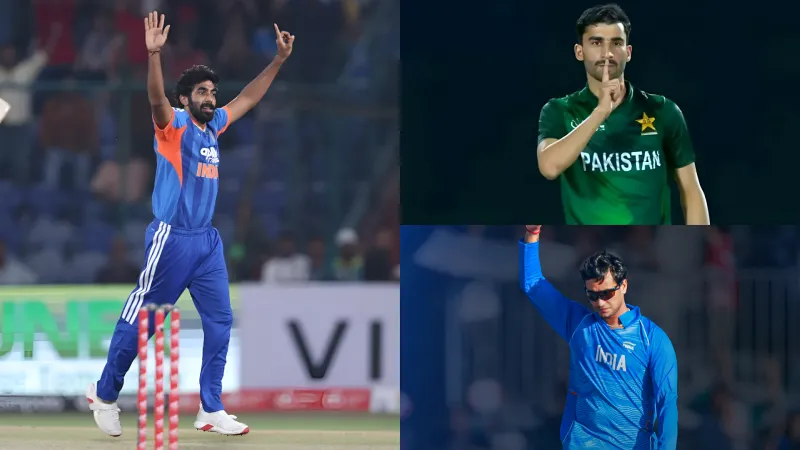
Here are 3 bowlers to watch out for in Asian Games 2026 Final:
1. Jasprit Bumrah
Jasprit Bumrah will naturally be one of the biggest names to watch when India take on Pakistan in the Asian Games 2026 gold-medal match.
The experienced pacer made an immediate impact in India’s semi-final against Sri Lanka, producing two wickets in his opening spell. He dismissed Sineth Jayawardena and Sohan de Livera inside the first five deliveries as Sri Lanka’s chase quickly fell apart. Bumrah eventually finished with figures of 2/7.
His ability to make an impact with the new ball could be particularly important against Pakistan’s aggressive top order. Sahibzada Farhan and Saim Ayub are capable of scoring quickly, while Usman Khan provides another attacking option.
Bumrah’s variations also make him a threat at the death. His yorkers, slower deliveries and ability to generate movement without compromising his accuracy give India an experienced option in pressure situations.
The Pakistan batters will therefore have to be particularly careful during Bumrah’s spell. An early breakthrough could force Pakistan’s middle order into action sooner than expected.
After his excellent performance against Sri Lanka, Bumrah enters the final with considerable responsibility on his shoulders.
2. Sufyan Moqim
Pakistan’s Sufyan Moqim could be the biggest bowling threat from the Pakistan camp.
The left-arm wrist-spinner was instrumental in Pakistan’s semi-final victory over Bangladesh. He picked up three wickets for 26 runs from his three overs, breaking the momentum of Bangladesh’s innings and restricting them to 111/7 from 13 overs.
Moqim’s performance is especially relevant because the Korogi Sports Park surface has already shown signs of assisting spin. India’s Ishan Kishan also noted after the semi-final that conditions could be challenging and that Pakistan are a spin-friendly team.
India have several batters capable of attacking spin, including Abhishek Sharma, Tilak Varma, Ishan Kishan and Shreyas Iyer. However, Moqim’s variations could make it difficult for them to consistently attack him.
His ability to pick up wickets while maintaining pressure in the middle overs could be crucial. If Pakistan captain Sahibzada Farhan gives him an extended spell when India’s aggressive batters are at the crease, Moqim could play a major role in determining the momentum of the final.
Having already produced a three-wicket haul in the semi-final, the spinner will enter the gold-medal match with plenty of confidence.
3. Abhishek Sharma
Abhishek Sharma‘s value to India extends beyond his aggressive batting. His left-arm spin could also prove decisive against Pakistan.
The youngster produced one of the most eye-catching bowling spells of the Asian Games 2026 men’s tournament in India’s semi-final against Sri Lanka. He claimed two wickets for just two runs from five deliveries, completing Sri Lanka’s collapse after Bumrah’s early strikes.
Abhishek’s ability to contribute in both departments gives India additional flexibility. He can open the batting and then provide useful overs of spin depending on the match situation.
Against Pakistan, his bowling could become particularly valuable if the opposition’s right-handed batters settle at the crease. His variations in pace and trajectory can create uncertainty, especially on a surface offering assistance to spin.
Pakistan have several right-handed batting options in their squad, including Sahibzada Farhan, Usman Khan, Hasan Nawaz and Abdul Samad. Abhishek could therefore be used strategically depending on the match-ups available to India.
His two wickets in just five balls against Sri Lanka also demonstrate how quickly he can change the course of an innings.
Disclaimer: This blog post reflects the author’s personal insights and analysis. Readers are encouraged to consider the perspectives shared and draw their own conclusions.