

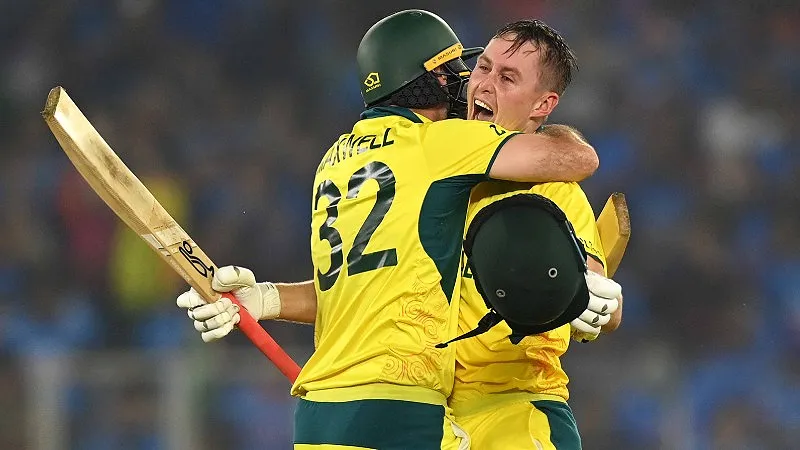

Australia’s Bangladesh tour was supposed to settle batting questions before the 2027 World Cup. It settled one of them, but not the one the selectors wanted. Cooper Connolly’s emergence handed the middle order a genuine new option with momentum behind it. Marnus Labuschagne’s performances, examined honestly, present a problem. With fifteen months until the tournament and most of the senior group absent for this series, Labuschagne had the clearest runway to make his case. He didn’t take it.
Connolly’s Arrival Changes The Middle-Order Picture
Cooper Connolly came into the Bangladesh series with an international average of 12.61 across 16 innings, one score of note, 61 not out against India, to justify the faith selectors had shown. He left with 184 runs at 61.33 and a strike rate of 99.46, the best return of any Australian batter across the three matches.
His defining moment came in the series finale at Mirpur: 149 not out off 134 balls, three consecutive sixes off Taskin Ahmed in the 45th over, dragging Australia to a one-wicket win and avoiding a sweep. The innings didn’t just save a match. It answered a question about whether Connolly was ready for ODI pressure, and it put the rest of the Australian middle order on notice about who the tour’s standout batter actually was.
Australia’s Bangladesh Tour Labuschagne ODI: A Series That Asked Hard Questions
Labuschagne moved in the opposite direction. He was trapped lbw for 2 inside his second over in the opener. In the second match, with Australia at 0 for 3, he made 55 not out off 85 balls, his first ODI fifty in 14 innings spanning nearly two years. He added 29 off 45 balls in the decider, sharing a 64-run fourth-wicket stand with Connolly before falling, the first of three successive half-century stands Connolly alone carried to the finish.
Team management shifted him to No. 7. For a batter whose career was built on top-order accumulation, that shift confirmed what the series was already showing: his ODI role is no longer clearly defined.
What The Numbers Actually Show
Labuschagne finished with 86 runs at 43.00. The average looks respectable until the strike rate appears: 62.77, the slowest of Australia’s frontline batters. Per ESPNcricinfo’s tour review, he was the slowest striker of the entire six-ODI Pakistan-and-Bangladesh leg at 57.67, behind Cameron Green’s 62.83.
Batter | Innings | Average | Strike Rate |
Cooper Connolly | 3 | 61.33 | 99.46 |
Cameron Green | 3 | 52.00 | 68.87 |
Marnus Labuschagne | 3 | 43.00 | 62.77 |
Matthew Short | 3 | 0.00 | 0.00 |
Green top-scored among recognised batters with 104 runs at 52.00, recording a fourth ODI fifty in the opener. Short suffered three consecutive ducks. Connolly’s figures stand alone. Labuschagne’s, in context, represent the tour’s clearest concern.
How The World Cup Batting Order Could Look Without Him
Steve Smith retired from ODI cricket, and his vacancy has been earmarked for Green, not reopened. Ahead of Labuschagne sit Head and Marsh at the top, Green in the middle, and Inglis and Carey as first-choice options once available. Connolly adds a sixth credible name to that queue after Bangladesh, and unlike most of the others in it, he arrives with momentum rather than questions about his place.
With most of Australia’s senior group absent for this series, Labuschagne had the most unobstructed runway he is likely to get before 2027. He didn’t convert it into a settled role.
What The Selectors’ Review Left Unsaid
The Bangladesh leg is a chance for Labuschagne and Green to settle into defined roles. Green’s numbers don’t close the argument on him. Labuschagne’s do. Beyond Oliver Peake’s four promising outings and Connolly’s emergence, the review concluded that selectors have been left with more batting questions than answers with fifteen months remaining.
Bangladesh won the series 2-1, their first-ever bilateral ODI series win over Australia, and the player under most scrutiny left with a slow strike rate, a late batting position, and a half-century that arrived only after his team had already collapsed. Australia’s Bangladesh tour Labuschagne ODI record now sits inside the selection conversation, pointing in one direction only.
Which batter should Australia lock in for the 2027 World Cup middle order, Labuschagne or Connolly? Tell us in the comments.
FAQs
Did Labuschagne score well in the Bangladesh ODIs?
Labuschagne averaged 43.00 from 86 runs but posted a strike rate of 62.77, the slowest of any Australian frontline batter on tour. His only fifty came after Australia collapsed to 0 for 3, with management dropping him to No. 7.
Who is Cooper Connolly?
Connolly is a 21-year-old Australian all-rounder who scored 149 not out off 134 balls in the series finale, finishing with 184 runs at 61.33. He entered the tour with an international average of 12.61 and left with the strongest claim to a middle-order spot.
What does Australia’s 2027 World Cup batting group look like?
Head, Marsh and Green lead the group, with Inglis, Carey and Connolly also in contention after the Bangladesh tour. Steve Smith retired from ODI cricket, and his spot has been earmarked for Green, not reopened for competition.
Did Australia win the ODI series in Bangladesh?
No, Bangladesh won 2-1, their first-ever bilateral ODI series win over Australia. Australia avoided a sweep only through Connolly’s unbeaten 149 in the Mirpur finale.
What was Labuschagne’s strike rate in the Bangladesh ODIs?
Labuschagne’s strike rate across the three matches was 62.77, the slowest among Australia’s recognised batters. ESPNcricinfo’s tour review rated him the slowest striker of the entire six-ODI Pakistan-and-Bangladesh leg at 57.67.