

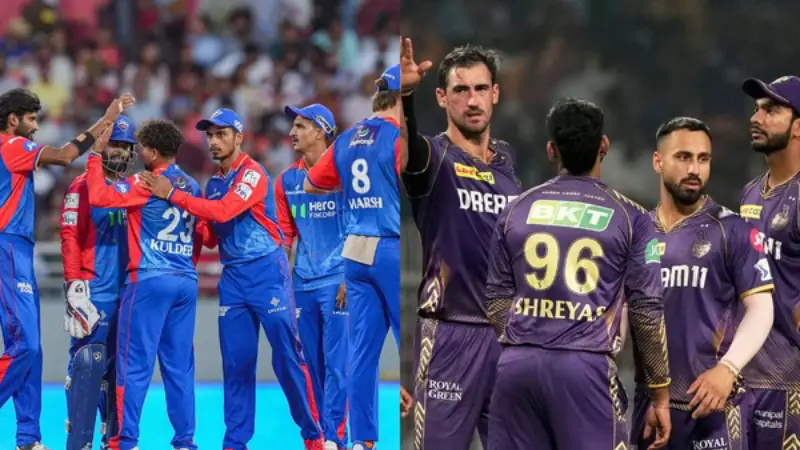

Kolkata Knight Riders arrive with three consecutive wins and the most disciplined spin attack in the tournament. Delhi Capitals arrive having lost four of their last five, with a middle order that keeps changing shape between matches and keeps producing the same result when quality bowling finds it. Sunil Narine and Varun Chakravarthy don’t need ideal surfaces to be dangerous. Against DC’s current batting structure, they need one phase where the pressure accumulates before the batting side can reset.
Narine and Chakravarthy Own the Middle
The KKR spin combination creates a specific tactical problem that DC’s middle-order has shown repeatedly it can’t solve. Narine controls line and length while generating enough variation to prevent batters from settling into any single defensive or attacking rhythm. Chakravarthy attacks set batters through the middle overs at exactly the phase where DC’s innings consistently stalls.
Against CSK in their most recent defeat, Delhi’s middle overs completely lost momentum after the power play. Positions four through eight couldn’t build the accelerating partnerships that modern T20 innings require when the top order departs mid-innings. KKR watched that match carefully. Narine’s economy rate and Chakravarthy’s 10 wickets from 7 innings confirm the spin combination has been executing at its highest level precisely when this fixture arrives.
IPL 2026 Form Gap Is Decisive
KKR’s three-match winning run reflects a bowling unit operating with the kind of collective confidence that makes individual performances more reliable rather than less. Narine and Chakravarthy bowl better when the fielding around them reflects a team winning matches consistently. Pressure created at one end compounds at the other.
DC’s four defeats from five create the opposite environment. The form gap between these sides isn’t just about points. It’s about the psychological state each batting unit arrives in when conditions tighten. KKR’s batting has started to reflect their bowling unit’s confidence. DC’s batting reflects a side that has been fighting without a reliable support structure long enough for individual batters to start compensating rather than executing.
Rahul Carries DC’s Entire Batting Structure
KL Rahul’s strike rate through the middle overs has been among the tournament’s best, and DC’s season record reflects how completely their batting depends on that one contribution. Across IPL 2026, DC’s middle-order reshuffles have followed the same pattern: Rahul performs, the innings progresses; Rahul departs early, the innings stalls.
Tristan Stubbs and Sameer Rizvi have both shown individual capability without demonstrating the consistency to carry an innings when Rahul isn’t available to set the tempo. Angkrish Raghuvanshi needs to accelerate faster at number three than his current average suggests he’s prepared to. KKR’s strategy writes itself: attack Rahul with pace in the powerplay, then deploy Narine and Chakravarthy once his wicket gives them a middle order that hasn’t yet solved how to handle top-quality spin under scoring pressure.
Delhi Pitch Adds Another Tactical Variable
Arun Jaitley Stadium has produced contrasting match profiles this season. One fixture produced a chase above 260. Others became slower contests where spinners controlled the innings from the 8th over onward. That surface unpredictability is a greater problem for DC than KKR because KKR’s bowling unit functions effectively across both profiles, while DC’s batting requires a reasonable scoring surface to compensate for the middle-order fragility.
If the pitch slows in the second innings, Narine and Chakravarthy will operate in precisely the conditions where their variations are hardest to read. DC batting second on a slowing Arun Jaitley surface against that spin combination, without Rahul if KKR’s pace attack removes him cheaply, is the scenario their selection and batting order construction needs a genuine answer for before the toss happens.
- Does Rahul’s form give DC enough to survive KKR’s spin twins, or does the middle-order fragility decide this match before the 15th over? Drop your pick in the comments and follow for IPL updates.
FAQs
Q: What is the biggest tactical battle in DC vs KKR?
DC’s fragile middle order faces Sunil Narine and Varun Chakravarthy across the middle overs, where Delhi has consistently lost momentum this season.
Q: Which team has better form heading into DC vs KKR?
KKR arrive with three consecutive wins while DC have lost four of their last five matches across the tournament.
Q: Why is KL Rahul so important for the Delhi Capitals this season?
Rahul has carried the majority of DC’s scoring responsibility, and their innings consistently stall when he departs early.
Q: How has Varun Chakravarthy performed for KKR in this tournament?
Chakravarthy has taken 10 wickets from 7 innings and consistently removes set batters during the middle-over phase.
Q: Can the Delhi Capitals still qualify for the IPL playoffs?
Yes, but they need immediate middle-order consistency and stronger bowling performances across their remaining fixtures.
Disclaimer: This blog post reflects the author’s personal insights and analysis. Readers are encouraged to consider the perspectives shared and draw their own conclusions.