

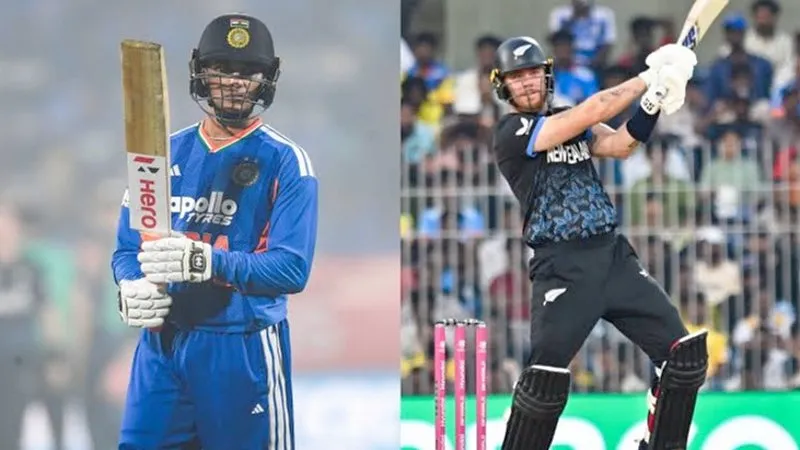

Sharma is the more destructive opener by raw scoring speed across a full T20I career, but Allen’s peak moments in the sport’s biggest matches are almost impossible to beat. Both men sit just 34 balls apart in the race to 6,000 T20 runs, a gap that says everything about how closely matched they really are. One trusts a full season’s worth of relentless aggression, the other detonates hardest in World Cup knockouts. Picking a winner depends entirely on which kind of destruction you value most.
The Two Fastest Openers to 6000 T20 Runs
No two openers have reshaped a T20 powerplay quite like these two. In September 2026, Sharma became the second-fastest batter in history to reach 6,000 T20 runs by balls faced, needing 3,420 deliveries. Only Allen sits above him, reaching the mark in 3,386 balls.
Context matters. Allen, 27, built his tally across international and franchise cricket since 2017 and has played 62 T20Is. Sharma, 25, debuted only in July 2024, yet by 2026 he’s India’s first-choice opener and a World Cup winner. Allen reached the 2026 final with New Zealand, lost to India, and led that tournament in sixes.
Powerplay Strike Rate and Six Hitting Compared
The debate sharpens inside the first six overs. Sharma’s T20I career strike rate sits at roughly 190, the highest in men’s T20I history among batters with a real sample size. His signature powerplay showing came against England in early 2025, when he struck 58 runs inside the first six overs, an Indian record in men’s T20Is, reaching fifty off just 17 balls.
Against Afghanistan on 17 September 2026, he blitzed 108 off 34 balls, including a 30-ball hundred, the fastest T20I century by any Full Member batter, beating Sikandar Raza’s 33-ball effort.
Allen’s counter is his 2026 World Cup campaign: 289 runs in seven innings at a strike rate of 203.52, with 20 sixes, the most by any batter in a single edition. His 33-ball century against South Africa in the semi-final was the fastest hundred in World Cup history.
Abhishek Sharma vs Finn Allen T20 Opener Stats
The full career picture, side by side, tells its own story.
Metric | Abhishek Sharma | Finn Allen |
|---|---|---|
T20I Matches | 59 | 62 |
T20I Runs | 1,858 | 1,663 |
T20I Average | 33.18 | 28.67 |
T20I Strike Rate | 194.55 | 170.74 |
All-T20 Strike Rate | 177.73 | 175.85 |
6000 Runs (Balls Faced) | 3,420 | 3,386 |
T20I Hundreds | 3 | 3 |
T20I Fifties | 12 | 7 |
T20I Sixes | 126 | 115 |
Phase | Abhishek Sharma SR | Finn Allen SR |
|---|---|---|
vs Pace | 200 plus | 188-190 |
vs Spin | 170-200 | 165-170 |
2025 PP SR | Record 58 runs vs England | 172.6 |
2026 WC PP SR | 18-ball 50 in Final | 164 |
Sharma’s numbers kept climbing through the Afghanistan series, while Allen’s last T20I remains the World Cup final in March. The gap between them keeps shifting, but never by much.
How Bowlers Try to Contain Each Opener
Both men share the same weakness: when they go, they go fast. Allen falls inside the powerplay in roughly 65% of his innings, a number reflecting maximum intent rather than a technical flaw. He faces just 10 to 12 balls per innings on average, a short stay that produces carnage or a rapid exit.
Sharma’s failure mode looks different. His ducks arrive in clusters, three in a row during the 2026 World Cup group stage against the USA, Pakistan and the Netherlands. His trigger movement creates problems against the back-of-a-length ball, though he’s adapted against spin, scoring 54 off 15 balls against Rashid Khan, Nabi and Mujeeb by dancing down the pitch.
Verdict on the More Destructive Opener
The answer changes depending on what destructive actually means. By T20I strike rate, the purest measure of scoring speed, Sharma is the more destructive opener in the format’s history. By consistency on the biggest stage against elite opposition, the 2026 World Cup is Allen’s strongest exhibit.
Sharma was outstanding in that same tournament’s final too; his 18-ball fifty under pressure against New Zealand proved decisive, but those three group-stage ducks suggest his ceiling sits higher than Allen’s while his floor sits lower. The full Abhishek Sharma vs Finn Allen T20 opener stats picture shows Sharma’s baseline running higher across more formats and more opposition, while both sit 34 balls apart in T20 history’s speed record.
Would you trust Sharma’s higher career strike rate over Allen’s explosive World Cup peak with the powerplay on the line? Drop your verdict below.
Frequently Asked Questions (FAQs)
Who is the fastest to 6000 T20 runs by balls faced?
Finn Allen holds the record, reaching 6,000 T20 runs in just 3,386 balls faced. Abhishek Sharma is second-fastest in 3,420 balls, with Andre Russell third in 3,550.
What is Abhishek Sharma’s strike rate in T20Is?
Sharma’s T20I career strike rate sits at roughly 190, the highest in men’s format history. He struck 108 off 34 balls against Afghanistan in September 2026, including a 30-ball century.
Is Finn Allen better than Abhishek Sharma?
The comparison is genuinely close, with each man leading in different categories. Allen owns a higher World Cup strike rate at 203.52, while Sharma holds the higher career T20I strike rate overall.
Who has the fastest T20I hundred by a Full Member batter?
Abhishek Sharma holds the record with a 30-ball century against Afghanistan on 17 September 2026. It beat Finn Allen’s 33-ball hundred against South Africa in the 2026 World Cup semi-final.
How many sixes has Abhishek Sharma hit in T20Is?
Sharma had struck 93 sixes in T20Is by the 2026 World Cup, making him the fifth Indian to reach that mark. Across all T20 cricket, his tally passes 370 sixes.