

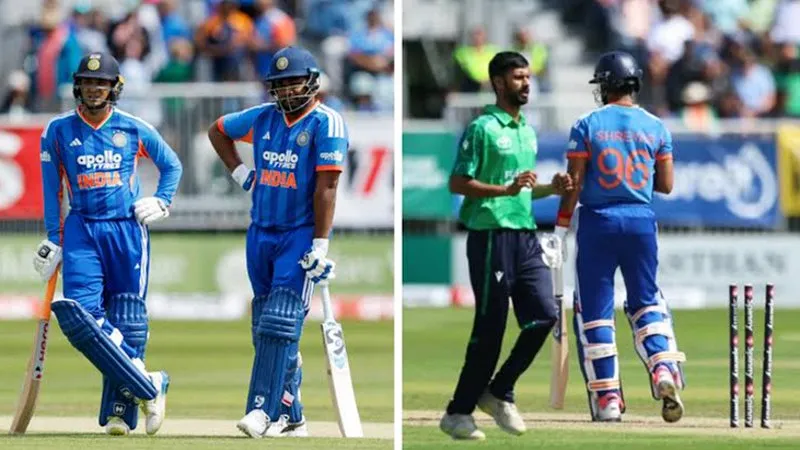

India left Belfast with a 2-0 series defeat that ended 16 unbeaten T20I series, their first bilateral loss in the format in nearly three years. Jai Moondra’s five-wicket debut on the way to the Player of the Series award did the visible damage, and he fully earned it. But the problem beneath it was more durable: a batting group whose instincts were calibrated for surfaces they’d been winning on for months, dropped into conditions that punished those instincts specifically and repeatedly.
The Ground That Exposed a Subcontinent Template
The Civil Service Cricket Club at Stormont offers early swing and seam under cloud cover, with the venue’s average first-innings score historically sitting at 129. Rain threatened on both days of the series. Both matches produced exactly the kind of early movement that the ground is known for.
India’s response was to keep playing the hard-handed game that had won them the T20 World Cup on the flat, firm decks of India and Sri Lanka. Ireland’s seamers found the opposite, and India’s top order had no in-game answer for it.
India Ireland T20I series 2026 batting collapse reasons Gambhir
The three batters at the top arrived with different recent histories, which makes their shared failure more instructive. Sanju Samson was the tournament’s standout finisher: an unbeaten 97 off 50 balls in a Super 8s chase, built on true bounce, earning him the Player of the Tournament award. Abhishek Sharma was already out of form: a pre-tournament illness in February had disrupted his bat swing, producing one fifty in seven World Cup innings. Shreyas Iyer hadn’t played a T20I since December 2023 and wasn’t in the World Cup squad, walking into Belfast as a brand-new captain. Three different starting points. Same outcome in both Belfast matches.
One Left-Arm Angle, One Shared Technical Flaw
Moondra, left-arm at around 88mph, dismissed Samson off the first ball in both matches: bowled via an inside edge off a cut shot in the opener, then lbw to a full inswinger in the decider with all three reds on review.
Abhishek made 50 in the first match before heaving an off-cutter across the line to deep midwicket. In the second, he top-edged a pull for a golden duck. Iyer flicked across the line to deep square leg for 3 in the first match, then was bowled for 10 by pace in the second. Four dismissals, one instinct: meet movement by swinging through rather than playing it late.
Batter | T20 WC 2026 Form | Belfast Match 1 | Belfast Match 2 | Common Vulnerability |
Sanju Samson | 97* off 50 in Super 8s; Player of the Tournament | Bowled, 1st ball — inside edge off cut | LBW, 1st ball — full inswinger, 3 reds | Hanging back against full, shaping deliveries |
Abhishek Sharma | 1 fifty in 7 innings; disrupted by pre-tournament illness | 50; out heaving off-cutter, caught deep midwicket | Golden duck — mistimed pull, top edge 3rd man | Hard hands across the line even when scoring |
Shreyas Iyer | Not in WC 2026 squad; last T20I Dec 2023 | 3 — caught deep sq leg, flicked across | 10 — bowled, beaten for pace by full ball | Across-the-line shots against movement |
The Selection Call That Protected the Wrong Thing
Captain Iyer explained leaving out 15-year-old Vaibhav Sooryavanshi by pointing to bowling balance: three seamers and one all-rounder. Batting coach Sitanshu Kotak said dropping in-form players for a debut would be unfair.
Neither explanation engaged with conditions. India protected reputations built on surfaces elsewhere rather than testing whether a fearless left-handed option might read the moving ball differently. Sooryavanshi’s selection wouldn’t have guaranteed a result, but the reasoning confirmed the template logic that undid the batting.
Five T20Is Against England, Same Problem Waiting
The next assignment is five T20Is against England starting July 1, on conditions that won’t differ much from Belfast. The talent isn’t the problem: Samson, Abhishek, and Iyer collectively hold a World Cup, IPL titles, and a Player of the Tournament award.
The lesson is specific: a subcontinent template needs a visible adjustment when the ball moves laterally from the first over. That adjustment never arrived in Belfast. The India-Ireland T20I series 2026 batting collapse reasons Gambhir must address before England start asking the same questions from July 1.
Does Gambhir need a fresh top-order template for seam conditions, or can the same batters adapt in England? Drop your take in the comments.
FAQs
Why did India lose 2-0 to Ireland in the 2026 T20I series?
India’s top order played across the line against swing and seam in overcast conditions, with Moondra taking five wickets. The hard-handed approach that won them the T20 World Cup failed twice at Stormont.
Why wasn’t Vaibhav Sooryavanshi selected for the Ireland 2026 T20I series?
Captain Iyer cited bowling balance, prioritizing three seamers and one all-rounder over a debut. Batting coach Sitanshu Kotak added that dropping in-form players to hand someone a debut would be unfair.
How did Moondra dismiss Samson first ball in both Belfast T20Is?
Moondra bowled Samson via an inside edge off a cut shot in the opener, then trapped him lbw with a full inswinger in the decider. Ball-tracking on review showed all three reds.
What was Shreyas Iyer’s T20I record entering the 2026 Ireland series?
Iyer hadn’t played a T20I since December 2023 and wasn’t part of the 2026 World Cup squad. He arrived in Belfast as a brand-new captain with no recent experience of seam or swing internationally.
What conditions does India struggle with in T20I cricket?
India’s batters, schooled on flat subcontinent pitches, have struggled to adjust to overcast, seam-friendly venues like Stormont. The across-the-line instinct suits true bounce but becomes a liability when the ball moves laterally from the first over.