

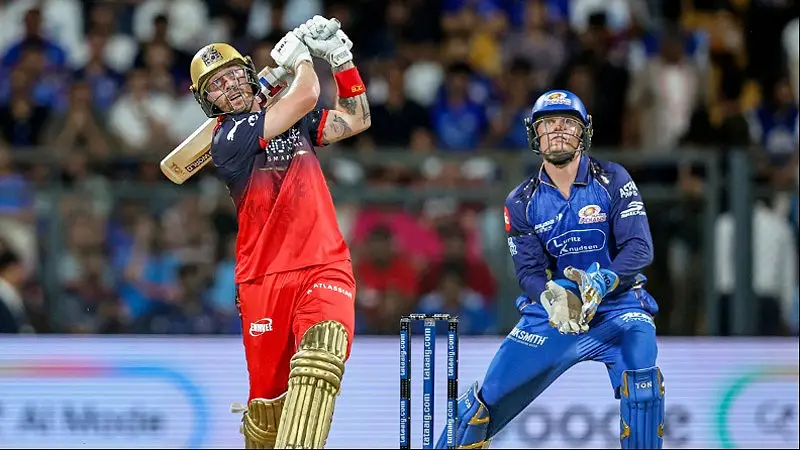

Phil Salt scored 78 off 36 balls against the Mumbai Indians at Wankhede. Six fours. Six sixes. Strike rate above 200 through the powerplay. RCB posted 240. MI chased 222. The 18-run margin traces directly to the platform Salt built before the fifth over was complete. His 132 runs from four IPL innings at 178.37 strike rate aren’t producing results through exceptional match conditions or weak bowling; they’re producing results against Trent Boult swinging the ball and Shardul Thakur’s disciplined death bowling. That’s not hot form. That’s a batter operating at a level where the standard quality of opposition bowling doesn’t constitute a sufficient problem.
Bangar Confirms Salt Wins Every Powerplay
Sanjay Bangar’s assessment, that Salt’s powerplay presence takes the game away from the opposition before spinners arrive, reflects the specific tactical consequence of a 200-plus strike rate opener in the first six overs. When a batter scores at 200 in the power play, the bowling captain’s plan cannot be implemented within the over-allocation available. Field adjustments require a delivery to confirm the shot the batter is playing, which means the adjustment arrives after the boundary has already been scored. Salt’s score of 78 from 36 balls means the bowling attack conceded at 2.16 runs per ball from his bat alone.
IPL 2026 Salt’s 178 Leaves Bowlers Helpless
The career context behind Salt’s current campaign numbers makes his 178.37 strike rate more impressive rather than less. His 1,188 career T20 runs at 176 overall strike rate confirms the current campaign isn’t an exceptional hot patch; it’s the sustained expression of a batting quality that has been producing results across formats and conditions for multiple seasons. Against Boult’s swing in the powerplay, specifically, his approach, attacking rather than surviving, taking the swing through the line rather than playing around it, is the specific technical choice that reveals confidence rather than recklessness.
Boult Swinging Salt Attacking RCB Winning
The specific tactical choice that Ambati Rayudu highlighted, Salt and Kohli deciding to attack Boult rather than survive him, is the correct decision when one batter in the partnership has the specific technical ability to hit through the swing rather than play around it. Boult’s left-arm swing is most effective when batters play tentatively, the half-commitment that produces the edge. Against a batter who commits fully to the attacking shot and hits through the line rather than around the movement, the swing becomes a delivery that arrives in the hitting zone rather than a delivery that moves away from the bat’s intended path.
240 Built Because Powerplay Was Dominant
The specific arithmetic that explains how RCB’s 240 against MI was constructed reveals the power play’s disproportionate contribution. Salt’s 78 from 36 balls at the top of the innings means RCB arrived at over seven with a scoring platform that made 240 achievable from normal middle-order and death-over contributions rather than exceptional ones. A team that scores 78 in the power play needs 162 from 84 balls, a rate of 11.57 per over, to reach 240. That rate is achievable for an RCB batting lineup that includes Kohli, Patidar, Tim David, and Krunal Pandya. A team that scores 45 in the power play needs the same total from the same remaining 84 balls at 16.07 per over, which requires exceptional performance from every subsequent batter.
- Does Phil Salt maintain the 178-plus powerplay strike rate that is making bowling attacks look helpless, or does opposition analysis eventually identify the specific technical adjustment that reduces his boundary frequency before RCB’s playoff qualification is secured? Drop your take and follow for IPL updates.
FAQs
What was Phil Salt’s score in the MI vs RCB 2026 match?
Phil Salt scored a blistering 78 runs off just 36 deliveries, hitting six boundaries and six maximums to set up RCB’s total.
How does Phil Salt’s strike rate compare to other RCB openers?
Salt currently holds a strike rate of 178.37 in IPL 2026, which is significantly higher than the career strike rates of most previous RCB opening partners.
Why did Sanjay Bangar praise Phil Salt’s batting?
Sanjay Bangar praised Salt because of his unique ability to win the power play by targeting 75 runs in the first six overs, effectively pushing the opponent out of the game early.
Which bowler did Phil Salt attack during the RCB vs MI Match 20 Highlights 2026?
Despite the ball swinging early on, Phil Salt successfully took on Trent Boult to ensure RCB did not lose momentum in the opening overs.