

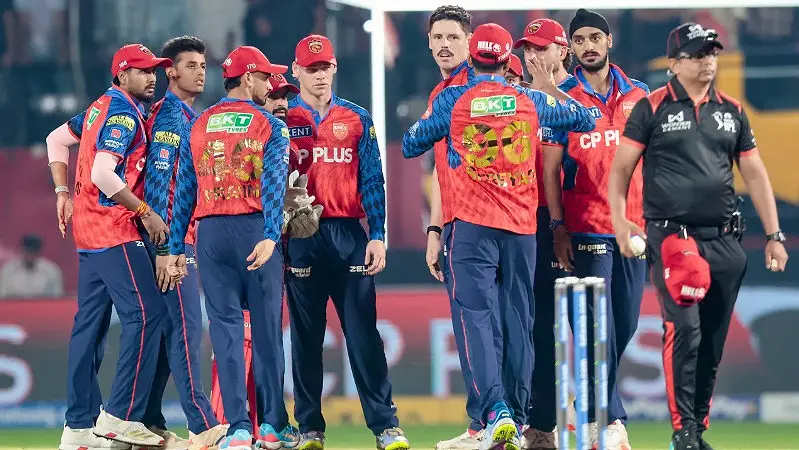

PBKS looked unstoppable through the first six matches of IPL 2026. Six wins, tournament-best powerplay metrics, and Shreyas Iyer’s captaincy drawing early praise. Underneath that run, their death-over economy was already bleeding at 10.1 RPO. The batting masked it. The NRR, which never climbed above +0.300 despite the dominance, quietly signalled how thin the margins were. The moment opposition teams identified the blueprint, the collapse was always going to be swift and severe.
Punjab Kings Death Bowling IPL 2026 Collapse: The Data
Phase | Matches | Death-Over Economy | Outcome |
Winning run | 1–6 | ~10.1 RPO | Batting dominance masked the leak |
Losing streak | 7–13 | ~11.8 RPO | Opposition targeted the final overs consistently |
The shift from 10.1 to 11.8 RPO across the two phases tells the whole story. In the winning run, explosive powerplay batting outscored the damage their bowlers conceded. Once that batting misfired even slightly, the death-over economy became fatal. There was no second line of defence.
The Match That Broke the Illusion
Match 40 against the Rajasthan Royals was the turning point. PBKS posted 222 for 4, a total that wins matches on most nights. RR read the blueprint precisely: weather the powerplay, trust the chase, attack the death.
Vaibhav Sooryavanshi hit 43 off 16 balls, and Yashasvi Jaiswal added 51 to give RR a massive platform. Then Donovan Ferreira took over, smashing an unbeaten 52 off 26 balls to earn Player of the Match honours. RR chased down the target with four balls and six wickets to spare. The winning streak was over, and every team in the competition now had a working formula against PBKS.
How Opposition Teams Figured Out PBKS
The Punjab Kings’ death bowling IPL 2026 collapse didn’t arrive without warning; the NRR told the story weeks before the losses did. Once RR proved the blueprint worked, teams stopped trying to match PBKS shot-for-shot and started milking the middle overs before launching at the final four.
Delhi Capitals executed it through KL Rahul and Abishek Porel, who dismantled the PBKS pacers in the closing overs to complete a comfortable chase. In Match 61 against RCB, Venkatesh Iyer hit 73* off 40 balls to power RCB to 222 for 4. PBKS fought back through Shashank Singh’s 56 and resistance from Suryansh Shedge, but were restricted to 199 for 8 , a 23-run defeat. By this point, their NRR had slid to +0.227. The cushion built across six wins had almost entirely dissolved.
Why Arshdeep and Jansen Couldn’t Adapt
The structural problem lies with personnel. Arshdeep Singh and Marco Jansen carry the death-over responsibility for PBKS. Lockie Ferguson hasn’t been a regular starter, meaning the entire burden of executing yorkers and varying lengths in the final four overs falls on two bowlers, with no reliable third option to rotate pressure or change angles.
Predictability is a death sentence in T20 cricket. When batters know which two bowlers are coming in overs 17 to 20, and those bowlers can’t consistently hit the blockhole under pressure, economy rates of 11.8 are the result. The powerplay metrics that made PBKS look invincible in April became irrelevant once opposition teams discovered they only needed to survive those six overs to win the match.
Does Shreyas Iyer carry more blame for not finding a death-bowling solution sooner, or was this always a squad-building failure? Drop your take below.
FAQs
What is Punjab Kings’ death bowling economy rate in IPL 2026?
PBKS conceded at approximately 10.1 RPO in the death overs during their six-match winning run, which climbed to 11.8 RPO during their six-match losing streak. The gap between those two figures is the clearest explanation for their season’s collapse.
Who bowls in the death overs for Punjab Kings in IPL 2026?
Arshdeep Singh and Marco Jansen carry the primary death-over responsibility for PBKS, with Lockie Ferguson not a regular starter. The lack of a reliable third option has made their final-four-overs bowling predictable and easy to target.
What broke the Punjab Kings’ winning streak in IPL 2026?
Donovan Ferreira’s unbeaten 52 off 26 balls in Match 40 gave Rajasthan Royals a six-wicket win chasing 223, ending PBKS’s unbeaten run and handing the rest of the league a clear blueprint. RR identified and attacked the death-over weakness that the batting had been masking throughout the winning streak.
Can Punjab Kings still qualify for the IPL 2026 playoffs?
PBKS have 13 points and remain in mathematical contention, but qualification requires other results to fall perfectly in their favour. Without a drastic improvement in death-over execution, their historic early-season start will count for very little.
What is Punjab Kings’ NRR in IPL 2026?
PBKS’s NRR has dropped to +0.227 after their six-match losing streak, down from a peak of just over +0.300 during their winning run. The erosion reflects how consistently they’ve been outscored in the final overs across recent matches.