

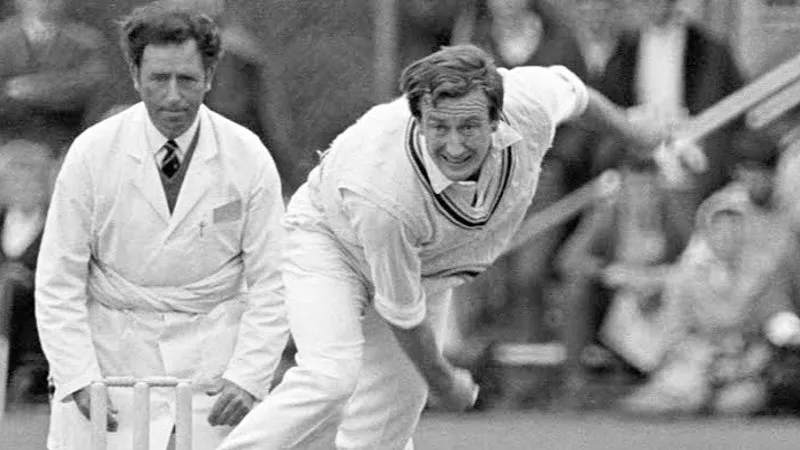

Two bowlers in the history of Test cricket have taken ten wickets in a match and then been left out of the very next one. That is the entire list across generations of the format. Of eighteen such instances on record, only Graham McKenzie in 1967-68 and Muttiah Muralitharan in 2002 were actively rested after a ten-for, and both moves were sold to the public as rotation rather than punishment. Central contracts changed the calculation entirely, and that scenario now looks close to impossible to repeat in the modern game.
The McKenzie and Muralitharan Precedents
Graham McKenzie took 10 for 151 against India in Melbourne during the 1967-68 series and was dropped for the third Test that followed. Former captains Bill Lawry and Ian Chappell both criticised the call publicly at the time, calling it indefensible for a bowler who had just delivered his career-best figures.
Muttiah Muralitharan took 10 for 98 against Bangladesh in Colombo in 2002 and was benched for the second match. Sri Lanka rotated their attack that week, also resting Aravinda de Silva, who had scored 206 in that same game and never played Test cricket again afterward.
Bowler | Match and Opposition | Match Figures | Why He Missed the Next Test |
|---|---|---|---|
Graham McKenzie | Melbourne vs India, 1967-68 | 10/151 | Rested against a weaker bowling attack, a call Lawry and Chappell publicly criticised |
Muttiah Muralitharan | Colombo vs Bangladesh, 2002 | 10/98 | Rotated out after Sri Lanka won the first Test comfortably |
Sixteen other bowlers | Various Tests, 1877 to 2026 | Various ten-wicket returns | Missed through injury, illness or unavailability, never by selection |
Test cricket ten-wicket haul dropped
Sixteen of eighteen bowlers who took ten wickets in a Test kept their place for the following match without question or debate. McKenzie and Muralitharan remain the only names selectors ever left out on a fit body, and both decisions still get cited whenever rotation policy comes under scrutiny.
Neither case involved poor form on the bowler’s part. Muralitharan’s Sri Lanka had just won comfortably, and McKenzie had just delivered the best match figures of his entire career. A bowler being dropped for underperformance immediately after a ten-wicket haul has never happened once in the recorded history of the format.
Central Contracts Reshaped Selection Power
Before England introduced central contracts in 2000, counties held as much claim on a bowler’s body as the national team management did. Australia moved to a similar system in the early 1990s, and India’s board followed suit from 2003 onward. Once boards owned the full calendar, a rested star could no longer simply turn out for his county the following week regardless of what the national side needed. That single shift moved workload decisions, and the reputational risk attached to them, entirely onto national selectors and coaching staff.
The practical effect showed up quickly in how boards talked about rest. A player left out under the old county system was described flatly as dropped, with no room for nuance. The same absence under central contracts instead became a scheduling call answered for by the board.
Rotation Replaced Blunt Squad Cuts
South Africa rested Dale Steyn and Vernon Philander through the mid-2010s using exactly this language of managed workload. England introduced formal workload caps for James Anderson and Stuart Broad from 2016 onward, extending their careers by several years. Australia now regularly rests Pat Cummins ahead of the heaviest tours on the international calendar. Boards stopped using the word dropped entirely in these situations.
Every rest since has been framed publicly as preparation, never as a response to a performance concern, even when the timing looks similar to the old cases. Media officers now brief journalists on workload data before a squad is even announced, closing off the kind of criticism Lawry and Chappell delivered in 1967-68.
A Scenario Central Contracts Now Prevent
The World Test Championship cycle makes every single result carry table weight, which raises the cost of resting a bowler who just won a Test almost single-handedly for his side. A board that dropped a ten-wicket bowler today would face immediate scrutiny from broadcasters, analysts and the player’s own management team within hours of the announcement.
The outrage that followed McKenzie in 1967-68 would look small compared to what a Test cricket ten-wicket haul dropped decision would generate under today’s levels of scrutiny and instant reaction.
Would today’s selectors ever repeat the McKenzie and Muralitharan calls? Share your view in the comments below.
Frequently Asked Questions (FAQs)
Has a bowler ever been dropped right after taking ten wickets in a Test?
Twice in recorded history. Graham McKenzie in 1967-68 and Muttiah Muralitharan in 2002 are the only two of eighteen bowlers rested after a ten-wicket haul.
Why was Graham McKenzie left out after his ten-wicket match?
Australia rested him for the third Test against India after his 10/151 in Melbourne. Bill Lawry and Ian Chappell both called the decision indefensible at the time.
Why did Sri Lanka rest Muttiah Muralitharan after his ten-for?
Sri Lanka rotated their attack after winning the first Test against Bangladesh in 2002. They also rested Aravinda de Silva, who never played Test cricket again.
How did central contracts change the way boards pick Test teams?
Central contracts gave national boards full control over a bowler’s calendar instead of counties or states. England adopted them in 2000, Australia earlier, and India from 2003.
What is the biggest ten-wicket match haul in Test history?
Jim Laker’s 19 for 90 for England against Australia in 1956 remains the largest. Narendra Hirwani holds the best debut figures with 16 for 136 in 1988.