

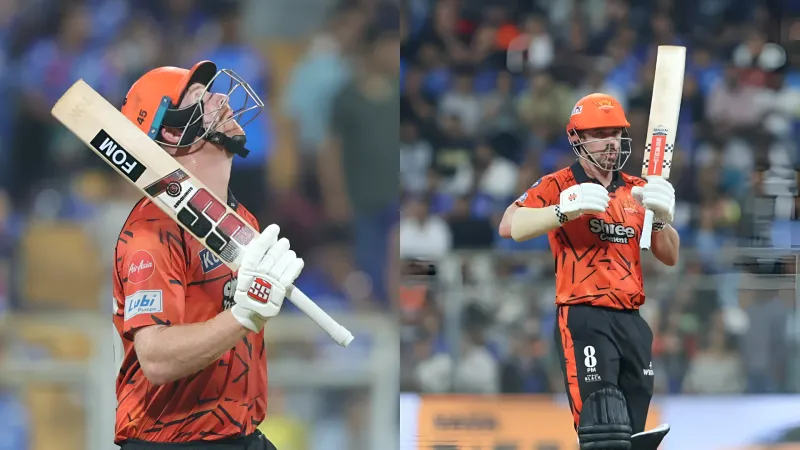

Heinrich Klaasen doesn’t announce his innings loudly. His numbers do that for him. A strike rate above 150 and an average close to 60 sustained across multiple matches represent the kind of consistency that wins tournaments rather than individual games. Against the Mumbai Indians, he did what he does every time he’s needed most: absorbed early pressure, rebuilt tempo, and converted a wobbling chase into a composed win. Travis Head added the explosive layer on top. Together, they revealed a structural problem in Mumbai’s bowling that one bad night alone doesn’t explain.
Klaasen Masters the Middle Overs
The phase that exposes most T20 batters is overs seven to fifteen, when powerplay field restrictions are gone, and spinners are finding their lines. Klaasen doesn’t find that phase difficult. He finds it clarifying. When wickets fall early, and required rates begin climbing, most batters either stall or throw their wickets away trying to force the pace. Klaasen absorbs the pressure first, restores tempo, and ensures the required rate never reaches the point where panic replaces calculation.
Against Mumbai, this quality was visible the moment early wickets created doubt about SRH’s ability to see the chase through. Immediate acceleration wasn’t his response. He rebuilt first, identified the right moments to attack, and moved through the gears when the platform was strong enough to support it. That sequencing is what makes his middle over presence worth more than any single boundary.
Attacking Spin Gives Klaasen an Edge
Klaasen’s evolution against spin is the most tactically significant development in his game this season. Earlier in his career, his approach to spin in the middle overs tended toward accumulation rather than attack, which was functional but predictable. Opposition captains could plan around it. This season, he reads specific overs where the bowling matchup favours the batter rather than the bowler, and he attacks those overs before the fielding captain can adjust.
Against Mumbai’s spinners, he targeted specific deliveries in his hitting zone and struck without hesitation. The rest he rotated or left deliberately. This selective aggression converts a containment phase into a momentum-building one and forces bowling captains into difficult decisions about when to deploy their best spin options.
Head’s Technical Upgrade Completes SRH Partnership
Travis Head’s contribution against Mumbai wasn’t just about the runs he scored. It was about how he scored them. Earlier this season, his tendency to swing hard from the outset produced mistimed shots when his base wasn’t set, and his weight transfer came too early. The innings against Mumbai showed a clear adjustment: a wider, more stable stance, better balance through the shot, and noticeably cleaner contact on deliveries he previously drove at without control.
Those refinements allowed him to pick up length earlier and commit to shots with genuine intent rather than hopeful power. When Head bats with that kind of technical clarity alongside Klaasen’s composed platform, SRH becomes a genuinely difficult team to bowl at. One batter punishes aggression. The other punishes containment.
IPL 2026 Proof That Consistency Wins
IPL 2026 has produced plenty of explosive performers who dominate highlights for a week before conditions level them out. Klaasen hasn’t done that. A strike rate above 150 and an average close to 60 across multiple innings describe a pattern, not a peak. That distinction matters most as the tournament enters its decisive phase. Teams competing in the final stages aren’t built on spectacular individual moments. They’re built on batters who deliver regardless of opposition quality, venue, or match situation. Klaasen’s continued production gives SRH a structural reliability that accumulates beyond any single performance.
- Does Klaasen’s middle over consistency or Head’s technical refinement give SRH a bigger advantage in the title race, or can Mumbai fix their bowling gaps before it’s too late? Drop your pick in the comments and follow for IPL updates.
FAQs
Q: What makes Heinrich Klaasen so consistent against top IPL attacks?
His ability to absorb early pressure, restore tempo, and attack specific spin matchups keeps his output reliable across varied match situations.
Q: How did Travis Head improve his batting against the Mumbai Indians?
He developed a wider, more stable stance that allowed him to pick up length earlier and time his shots cleanly.
Q: How does Klaasen handle spin bowling in the middle overs?
He identifies specific deliveries in his hitting zone and attacks them selectively without taking unnecessary risks with his wicket.
Q: Can SRH rely on Klaasen through the tournament’s final stages?
His sustained strike rate above 150 and average close to 60 make him SRH’s most dependable middle order performer heading into the knockouts.
Disclaimer: This blog post reflects the author’s personal insights and analysis. Readers are encouraged to consider the perspectives shared and draw their own conclusions.